
Columnists
How Dependent Is Turkey on Foreign Energy?

By Enes Yazıcı – Faculty of Economics, Boğaziçi University
Turkey, with its fast-growing economy and young population, is a country where energy demand increases year by year. Yet to meet this demand, the country remains heavily dependent on foreign sources. So, which countries supply most of Turkey’s energy?
According to 2023 data, over 70 percent of Turkey’s energy needs are met through imports. In natural gas, Russia leads with 45 percent, followed by Iran (16 percent) and Azerbaijan (15 percent). The remainder comes from liquefied natural gas (LNG) imports, primarily from the United States, Algeria, and Nigeria. Dependence on foreign supply in natural gas reaches as high as 99 percent.
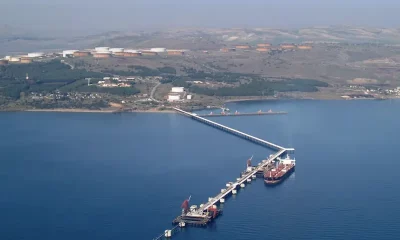
When it comes to oil, the picture is similar: 93 percent of demand is met through imports, with Iraq, Russia, and Kazakhstan being the primary suppliers. A key role is played by the Kirkuk-Ceyhan pipeline, which transports around 25 million tons of crude oil annually from Iraq’s Kirkuk region to the Turkish port of Ceyhan. Another significant route is the Baku-Tbilisi-Ceyhan pipeline, carrying Caspian oil through Azerbaijan and Georgia to the Mediterranean. These pipelines not only strengthen Turkey’s role as an energy corridor but also generate valuable foreign exchange revenues.
Coal also plays a central role in Turkey’s electricity production. Around 35 to 40 percent of electricity comes from coal-fired power plants, with about half of the coal being imported. Most of the domestic supply consists of low-calorific lignite. Imported hard coal, on the other hand, has a higher energy yield and, with its lower sulfur and ash content, is somewhat less harmful to the environment compared to local lignite.
The Root Causes of Energy Dependence
Turkey’s annual energy imports worth 50–60 billion USD place a significant burden on the economy and represent one of the main drivers of the current account deficit. Limited reserves of oil and gas structurally tie the country to foreign suppliers. For example, domestic natural gas production covers only 1 percent of demand, while domestic oil production meets just 7 percent.
Between 2014 and 2023, Turkey’s annual electricity consumption grew by around 26 percent. Industrialization and population growth continue to push demand upward, while domestic supply fails to keep pace, making imports inevitable.
Another key reason is the insufficient development of alternative energy sources. Renewables such as wind, solar, and hydropower have yet to replace fossil fuels at scale. Last year, wind and solar accounted for about 18 percent of Turkey’s total electricity production, while hydropower output fluctuates due to recurring droughts.
The Dilemma of Dependence
Relying on imports for most of its energy needs exposes Turkey to structural vulnerabilities. Since imports are paid for in US dollars or euros, the depreciation of the Turkish lira directly increases costs—inevitably leading to higher electricity prices.
Geopolitical risks further complicate Turkey’s energy security. Political and security issues in Iraq, for instance, directly affect the operation of the Kirkuk-Ceyhan pipeline. Similarly, the war in Ukraine and Western sanctions on Russia have created uncertainties regarding Turkey’s access to Russian gas.
In conclusion: Turkey’s heavy reliance on energy imports represents not only an economic burden but also a strategic vulnerability. Unless domestic resources and renewable alternatives are significantly expanded, the country’s dependence on foreign suppliers will remain a defining challenge for its economy and geopolitics.
Source: Ministry of Energy and Natural Resources of Turkey, TÜİK (Turkish Statistical Institute)
Related Posts










ECB Holds Rates Steady
The European Central Bank has left interest rates unchanged, citing persistent inflation risks and rising energy prices while signaling a...

Turkey‑Iraq Pipeline Deal Eases Global Oil Crisis Pressure
The resumption of Kirkuk oil exports via Turkey offers relief to volatile global energy markets amid Middle East tensions.


Turkey’s Best-Selling Car Brand Revealed by Official Data
New data from the Turkish Statistical Institute (TÜİK) reveals the best-selling car brand in Turkey and highlights the most popular...


Crypto Trading in Turkey Nears $200 Billion
Turks are increasingly turning to crypto investments as millions of people enter the digital asset market. With Turkey’s annual crypto...


Google launches AI marketing tool Pomelli
Google has introduced Pomelli, a new AI-powered marketing tool that can automatically create ads, visuals and social media posts after...
How to Produce Quality Content in Times of Crisis
Aslı Yirsutimur | Digital Content Manager Content production is often seen as a task for calmer times. Yet in reality,...


Turkey Holds Interest Rate at 37%, Pausing Nine-Month Easing Cycle
The Central Bank of the Republic of Türkiye (CBRT) announced its second interest-rate decision of the year, keeping the policy...
The Invisible Compass of Leadership in the VUCA Age
Alpay İlker Toy | International Business Development and Strategy Consultant For a generation raised within the massive, rigid, and hierarchical...
The Great Silence: Why Startup Insolvency Reports Have (Seemingly) Dropped
Yeşim Çevik | trbusiness.de Germany Representative From “Burn Rate” to Strategic Resilience: While mid-sized industrial companies buckle under the pressure...


“You Can’t Go Global Without Leaving Your Comfort Zone”
We spoke with Ersoy Soyer, founder of Nexrone, about his entrepreneurial journey, the strengths and weaknesses of Turkey’s startup ecosystem,...