
Interview
“The Digital World Is Now Shaped by Perception”
Digital communication is no longer defined solely by technology; it is now shaped by concepts such as perception management, trust, ethics, and artificial intelligence. We spoke with Prof. Dr. Ali Murat Kırık, Head of the Department of Visual Communication Design at Marmara University Faculty of Communication, about the cultural transformation of the digital world, the new role of social media, and how brands can survive in this era.

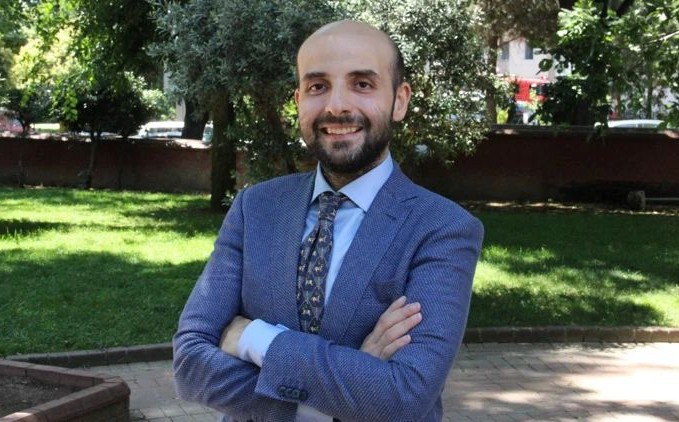
Interview by: Aslı Çelebi
We are living in a time when the pulse of the digital world beats faster each day. Notification sounds have become the background music of our lives, and social networks are now a natural part of our daily routine. In such an era, I set out with a question that has been on my mind for a long time: “Who can explain this rapidly changing world of communication most accurately?” The answer led me to the Faculty of Communication at Marmara University, to a name students speak of with great respect: Prof. Dr. Ali Murat Kırık.
While preparing the interview questions, I wasn’t only thinking about technical matters; I was also considering the invisible dynamics of social media, the digital identity quest of brands, the growing influence of artificial intelligence, and the challenges of intercultural communication. I hoped our conversation would be not just a typical interview but a journey through the layers of the digital age. I believe that’s exactly what it became. And here is the conversation that emerged.
Aslı Çelebi: Professor, how do you define the concept of “digital communication” today?
Prof. Dr. Ali Murat Kırık: In my view, digital communication is not merely a process of transferring information through technological tools; it is a structure in which cultural, social, and economic interactions are reshaped. Digital communication is a dynamic, interactive process in which individuals and institutions share thoughts, emotions, and information in multidimensional ways. Messages are no longer one-way; they constantly evolve through ongoing feedback. Therefore, when defining digital communication, we must focus not only on the tools themselves but also on their societal impact and the new ways in which meaning is produced.
Don’t Miss
“For Me, Business Life Is Both a Challenge and a Source of Enjoyment”
Can Germany and Turkey Truly Complement Each Other?
How has the digitalization process transformed society’s communication habits?
Digitalization has freed communication from the limits of time and space, enabling real-time interaction between individuals. As traditional face-to-face communication is replaced by digital platforms, people now reconstruct their identities across multiple channels. Society now has not only access to information but also the power to produce it. However, this also brings problems related to superficiality, speed, and accuracy. In short, while digitalization democratizes communication, it also creates new challenges such as information pollution and perception manipulation.
Has social media become a “public sphere,” or is it still a personal medium?
Today, social media has become the digital extension of the traditional public sphere. People aren’t just sharing personal posts; they are expressing opinions on social issues and shaping public discourse. Yet this publicness is not completely free; algorithms, economic interests, and political pressures shape its boundaries. Thus, social media is both a personal space of expression and a monitored public platform. Its ability to become a true “public sphere” depends on progress in freedom of expression and digital ethics.
The concept of “perception management” is now used even at the individual level. How does this affect social trust?
The personalization of perception management significantly damages the fabric of social trust. People now strategically construct their identities in digital environments; authenticity is replaced by representation, and reality by image. This reduces sincerity in social relationships and creates a constant “trust test” between individuals. As the gap between what is real and what is shown widens, mutual trust in society weakens. The greatest problem of the digital age is that we live in a reality shaped more by perception than by information.
What are the most common mistakes institutions make when creating a digital communication strategy?
Institutions often limit their digital communication strategies to social media visibility, which is a major mistake. Digital communication is a holistic process that includes corporate identity, audience analysis, content management, and crisis communication.
“Digital communication is no longer about technology alone; it is about how perception shapes reality.”
Another common mistake is treating digital platforms as simple “billboards,” when in fact these spaces require two-way engagement and community building. When institutions fail to base their strategies on data analysis or ignore digital ethics, they face long-term trust issues. A strategy should be built not on visibility but on sustainable engagement.
How can brands use “visual communication design” not just as an aesthetic element but as a strategic tool?
Visual communication design is like a silent language that reflects a brand’s identity. The intentional use of colors, typography, composition, and symbols shapes brand perception. Aesthetics are important, of course, but the real value lies in blending aesthetics with strategic messaging. A brand’s visual language must align with the cultural codes of its target audience and remain consistent across all touchpoints. Strategic visual communication aims not merely to look “beautiful,” but to leave a meaningful and memorable impression.
Now let’s talk about the famous topic: artificial intelligence. How is AI reshaping digital marketing and content production?
Artificial intelligence has made all dynamics of digital marketing data-driven. Audience analysis, content personalization, and engagement measurement now rely not on human intuition but on algorithmic predictions. While this increases efficiency and speed, it also brings the risk of standardization in content production. Originality can be overshadowed by automated patterns. AI should not replace human creativity; it should support it and strengthen strategic decision-making processes.
“Artificial intelligence should support creativity, not standardize it.”
As you know, we are a Germany-based media outlet. So I want to ask a question through the lens of Germany. In countries like Germany, digital communication dynamics work differently than in Turkey. How should Turkish brands adapt to these cultural and digital differences?
In countries like Germany, digital communication is more systematic, data-oriented, and highly privacy-conscious. In Turkey, emotional connection, interaction, and speed come to the forefront. Turkish brands must develop “localized digital strategies” that consider these differences. The tone of the message, visual language, even the timing of posts should be adapted to cultural norms. The path to global branding lies in balancing universal messaging with local sensitivities. Adaptation means not “copying” digital culture but “translating” it.
In your opinion, in which areas is Turkey strong in digital transformation, and in which areas does it lag behind?
Don’t Miss
Artificial intelligence, big data and automation…
Turkey’s Top Taxpayers of 2024 Revealed: Baykar Chairman Selçuk Bayraktar Leads the List
Turkey has made significant progress in areas such as public services, banking, and e-government applications. However, education, digital literacy, and cybersecurity have not yet reached the desired level. Digital transformation is not achieved solely through technological investment; it must be supported by cultural awareness. Unfortunately, digital consciousness remains limited across much of society. Our strength is our capacity for rapid adaptation; our weakness is the lack of a sustainable digital culture.
What do you think about local digital platforms or applications such as NSosyal?
“Local digital platforms must offer quality—not just locality—to be sustainable.”
The development of local digital platforms is extremely important for digital independence. Initiatives like NSosyal are not just technological alternatives; they are efforts to build cultural identity as well. Yet for such platforms to be sustainable, they must meet international standards in terms of technical infrastructure, user experience, and content policy. Local platforms should be chosen not merely because they are “local,” but because they offer quality content and a safe user experience. This understanding is crucial both for digital sovereignty and digital ethics.
Aslı Çelebi: Professor, thank you very much for this wonderful conversation.
Ali Murat Kırık: Thank you.
Related Posts



Metehan Türkay: Real life is much funnier than my content
On one side, B2B sales processes for over 140 companies; on the other, social media content poking fun at the...


Aslı Gümüşel: Looks sell the first bottle. The product sells the second.
Aslı Gümüşel, who has expanded Ashley Joy into 15 countries, spoke to Trbusiness.de about her entrepreneurial journey, the invisible hurdles...
Türkiye Launches AI Revolution: 1 Trillion TL Investment in the Future of Technology
Yeşim Çevik | trbusiness.de Germany Representative Looking at the global startup and venture capital scene, I see a clear picture:...
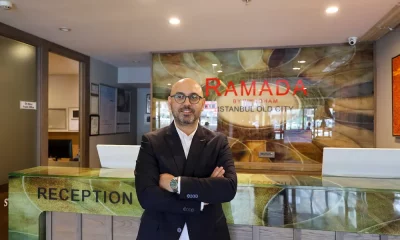

A Timeless Experience in the Heart of the City
Abdullah Şancı, General Manager of Ramada by Wyndham Istanbul Old City, spoke with trbusiness.de about the changing dynamics of Istanbul...
AI in Logistics: Turkish AI Startup Raises $3.2 Million
Yeşim Çevik | trbusiness.de Germany Representative Founded in 2025, Munich-based startup 5U AI has raised more than €2.7 million ($3.2...
Why Does the Best Offer No Longer Win?
Onur Kurtay | Founder of Nexon Global Strategy Office For years, there was a fixed equation in the minds of...
Global Expansion: Timing Decides Everything
Yeşim Çevik | trbusiness.de Germany Representative Why international expansion requires more strategy than courage “We are entering the US market...


Türkiye Higher Education Employment Indicators 2025: Medicine and Aviation Lead Job Market Success
New official employment data reveals Türkiye’s top-paying university degrees, fastest-hiring career sectors, and graduate job market trends for 2025.


“Technological Transformation is No Longer Measured in Years, but in Months”
Celalettin Kayahan, Board Member of TSMC Holding, speaks to trbusiness.de about his journey from the textile industry to high-tech ventures,...
You Don’t Export to Germany; You Build Systems There
Onur Kurtay | Founder of Nexon Global Strategy Office Germany is the country to which Turkey exports the most. This...