
Columnists
Germany’s Biggest Integration Test: Waiting

Harun Yazici / Editor in Chief, trbusiness.de
Germany’s need for skilled labor is no longer just a statistical statement; it has become a real issue shaping the country’s social, economic, and demographic future. Industries are hungry for qualified workers, companies struggle to find trained staff, and the government keeps announcing reform after reform. On paper, everything seems to be calling migrants in.
But the truth is this: Germany’s biggest integration test is not language, not culture, not even diploma recognition. It’s waiting.
As someone who came to Germany with the Opportunity Card, I have experienced this firsthand. A system designed to facilitate migration on paper turns into a marathon of patience in practice. And this isn’t just a burden for individuals — it’s a real loss for the German economy.
Welcome to the Land of Letters
One of the first things you notice when you arrive in Germany is this: the country is not as digital as the Germany you imagined. The state still functions through physical mail.
MY OTHER ARTICLES
Can Germany and Turkey Truly Complement Each Other?
A single letter takes a week to reach my mailbox. My response takes three days to get back. Processing begins after ten days. Getting an appointment date? That takes a few more weeks.
In Turkey, many of these procedures can be completed with a few clicks on e-Government. Here, almost every step is tied to “postal waiting time.”
This doesn’t just waste my time. Skilled workers that Germany desperately needs are unable to start work for weeks, sometimes months. The crisis Germany calls a “shortage of skilled labor” is deepened by bureaucracy.
Getting an Appointment: The Psychological Threshold of Integration
One of the biggest challenges for migrants is the appointment process.
Residence permit appointment? The earliest is in three months.
Registration procedures? Hours of waiting in line.
Calling for information? Often impossible.
Most of the appointments I managed to get were at least a month after my initial request.
The system quietly whispers in your ear:
“If you want to live in this country, you must first learn to wait.”
But it’s not only us who are waiting. The German economy is waiting too.
An engineer, a healthcare worker, an IT specialist — all of them are kept from starting work for weeks due to bureaucratic delays. This means immediate productivity loss and economic damage.
The Other Big Challenge: Finding a Place to Live
I personally did not face housing problems when I arrived in Germany — thanks to my sister. But I’ve met people who attended viewings with 5 to 10 other candidates at the same time. The landlord’s questions sometimes felt like a job interview:
“What do you do for a living?”
“Proof of income?”
“How many people?”
No apartment means no address.
No address means no bank account.
No bank account means no insurance.
And without insurance, even job applications remain incomplete.
Despite all this, Germany still says, “We want skilled workers.” Yet those who arrive first get lost in the bureaucratic maze.
Reforms Exist, but Implementation Is Slow
The Opportunity Card, Blue Card facilitations, simplified recognition processes… These are all good steps.
Germany genuinely needs professional migrants and acknowledges this at the policy level.
But in daily life, the impact of these reforms hits a wall of bureaucracy.
The migrant arrives ready — but the system is not.
There is demand, but the process doesn’t work.
There is a labor shortage, yet the workforce is kept waiting.
This shows that Germany faces not only an integration issue, but also a broader issue of economic dynamism. If a skilled worker starts a month later, that’s a month of lost production, a month of postponed services. Scaled up, this waiting turns into millions of euros in economic loss.
From my personal experience, I’ve seen that Germany’s migration policies are modernizing — but implementation still moves at the speed of the 1990s.
There is a Germany that invites migrants, and another Germany that makes them wait.
And this contradiction works against not only the migrant, but the country itself.
Waiting is the biggest integration test in Germany today.
But it is also Germany’s biggest economic test:
How much longer can Germany afford to keep its skilled workforce waiting?
Related Posts





Metehan Türkay: Real life is much funnier than my content
On one side, B2B sales processes for over 140 companies; on the other, social media content poking fun at the...


Aslı Gümüşel: Looks sell the first bottle. The product sells the second.
Aslı Gümüşel, who has expanded Ashley Joy into 15 countries, spoke to Trbusiness.de about her entrepreneurial journey, the invisible hurdles...
Türkiye Launches AI Revolution: 1 Trillion TL Investment in the Future of Technology
Yeşim Çevik | trbusiness.de Germany Representative Looking at the global startup and venture capital scene, I see a clear picture:...
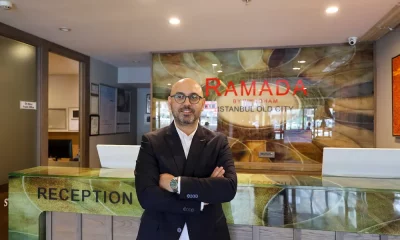

A Timeless Experience in the Heart of the City
Abdullah Şancı, General Manager of Ramada by Wyndham Istanbul Old City, spoke with trbusiness.de about the changing dynamics of Istanbul...
AI in Logistics: Turkish AI Startup Raises $3.2 Million
Yeşim Çevik | trbusiness.de Germany Representative Founded in 2025, Munich-based startup 5U AI has raised more than €2.7 million ($3.2...
Why Does the Best Offer No Longer Win?
Onur Kurtay | Founder of Nexon Global Strategy Office For years, there was a fixed equation in the minds of...
Global Expansion: Timing Decides Everything
Yeşim Çevik | trbusiness.de Germany Representative Why international expansion requires more strategy than courage “We are entering the US market...


Türkiye Higher Education Employment Indicators 2025: Medicine and Aviation Lead Job Market Success
New official employment data reveals Türkiye’s top-paying university degrees, fastest-hiring career sectors, and graduate job market trends for 2025.


“Technological Transformation is No Longer Measured in Years, but in Months”
Celalettin Kayahan, Board Member of TSMC Holding, speaks to trbusiness.de about his journey from the textile industry to high-tech ventures,...
You Don’t Export to Germany; You Build Systems There
Onur Kurtay | Founder of Nexon Global Strategy Office Germany is the country to which Turkey exports the most. This...