
Columnists
Aesthetic Medicine and Ethical Communication: What Can Be Said — and What Cannot?

Ceren Saltoğlu / Brand & Marketing Manager – Health & Aesthetics Industry
“A story that begins with trust becomes a brand.”
Over the years, the aesthetics industry has transformed from a healthcare service into a trend-driven field. Radiant faces under the spotlight of social media, flawless filters, quick “before-and-after” transformations… Amid this fast-paced flow, we often overlook the most critical element of all: ethical communication.
Yes, aesthetic medicine is a service. But when communication is misused, it can open wounds that are invisible yet deeply felt. Because communication requires just as much sensitivity as medicine itself — especially when it influences a person’s body perception, self-esteem, and decision-making process.
What Can Be Said: Transparency, Accuracy, Information
Ethical communication respects an individual’s right to make an informed decision.
For this reason, any expert or institution may — and must — clearly explain:
• the scientific basis of a treatment,
• realistic expectations,
• possible risks and side effects,
• the recovery process,
• who is suitable for the procedure and who is not.
Informing is not manipulation. On the contrary — it empowers people and gives them the freedom to choose. A person can only decide whether they want a procedure if they have accurate information.
What Cannot Be Said: Fear, Pressure, and Creating a Sense of Deficiency
There is no such thing as a “miracle” in aesthetics. And no procedure increases a human being’s value.
MY OTHER ARTICLES
How Artificial Intelligence, Data, and Personalized Treatments Are Transforming Healthcare
How Do You Build a “Brand” in the Healthcare Industry?
That’s why ethical communication firmly excludes statements such as:
• “If you don’t get this done, your face will collapse.”
• “Your nose absolutely needs surgery.”
• “Everyone else is doing it — you should too.”
• “If you continue like this, you’ll look old.”
• “You can’t be happy looking like that.”
Such sentences are not only unethical — they are an intrusion into a person’s self-worth. The purpose of medicine is to heal; therefore, harming someone through language is unacceptable.
Moments When Words Are Stronger Than Aesthetics
Aesthetic treatment can sometimes help a person feel better about themselves.
But the wrong sentence can overshadow even the most successful procedure.
Because the way people see themselves is shaped through words.
This is why ethical communication focuses not on beauty, but on well-being.
It elevates information, not the individual.
It does not frighten, force, or manipulate.
It simply explains.
Aesthetic medicine may appear to be about beauty from the outside, but at its core, it requires humanity. Like every field that touches the human body, communication within this space carries a significant responsibility.
Which is why we must constantly ask ourselves:
“Are we selling a procedure today — or are we touching someone’s life and emotional world?”
If the answer is the latter, then ethical communication is not just an option; it is the only path.
Warm regards
Related Posts





Metehan Türkay: Real life is much funnier than my content
On one side, B2B sales processes for over 140 companies; on the other, social media content poking fun at the...


Aslı Gümüşel: Looks sell the first bottle. The product sells the second.
Aslı Gümüşel, who has expanded Ashley Joy into 15 countries, spoke to Trbusiness.de about her entrepreneurial journey, the invisible hurdles...
Türkiye Launches AI Revolution: 1 Trillion TL Investment in the Future of Technology
Yeşim Çevik | trbusiness.de Germany Representative Looking at the global startup and venture capital scene, I see a clear picture:...
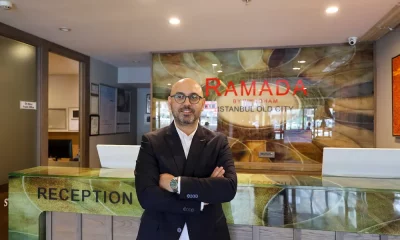

A Timeless Experience in the Heart of the City
Abdullah Şancı, General Manager of Ramada by Wyndham Istanbul Old City, spoke with trbusiness.de about the changing dynamics of Istanbul...
AI in Logistics: Turkish AI Startup Raises $3.2 Million
Yeşim Çevik | trbusiness.de Germany Representative Founded in 2025, Munich-based startup 5U AI has raised more than €2.7 million ($3.2...
Why Does the Best Offer No Longer Win?
Onur Kurtay | Founder of Nexon Global Strategy Office For years, there was a fixed equation in the minds of...
Global Expansion: Timing Decides Everything
Yeşim Çevik | trbusiness.de Germany Representative Why international expansion requires more strategy than courage “We are entering the US market...


Türkiye Higher Education Employment Indicators 2025: Medicine and Aviation Lead Job Market Success
New official employment data reveals Türkiye’s top-paying university degrees, fastest-hiring career sectors, and graduate job market trends for 2025.
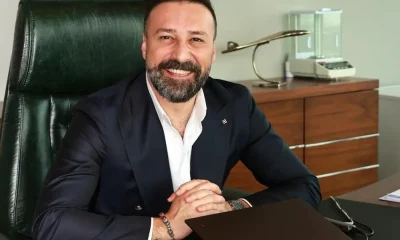

“Technological Transformation is No Longer Measured in Years, but in Months”
Celalettin Kayahan, Board Member of TSMC Holding, speaks to trbusiness.de about his journey from the textile industry to high-tech ventures,...
You Don’t Export to Germany; You Build Systems There
Onur Kurtay | Founder of Nexon Global Strategy Office Germany is the country to which Turkey exports the most. This...