
Business World
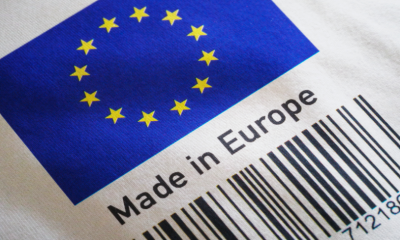
Turkey Now Included in “Made in Europe” Framework
The European Union has included Turkey in its new “Made in Europe / Made in EU” policy framework aimed at strengthening European industry. The move could reinforce Turkey’s role in the European value chain, particularly in the automotive and industrial manufacturing sectors.


The European Union recently unveiled a new industrial policy package that incorporates the “Made in Europe” approach. The initiative is designed to boost industrial production within Europe and strengthen the bloc’s competitiveness in global markets, particularly in response to China.
As part of the Industrial Acceleration Act prepared by the European Commission, the EU plans to prioritize European-made products in public procurement.
According to the draft regulation, products manufactured in Turkey within the scope of the EU–Turkey Customs Union may, under certain conditions, be considered of EU origin. This means that some goods produced in Turkey could be treated as part of the European production chain and fall under the “Made in EU” category.
What It Means for Turkish Industry
The new policy is expected to apply mainly to strategic sectors such as automotive, steel, aluminum, cement, and clean technologies. In these areas, the EU intends to prioritize European production through public procurement policies and government support.
Turkey’s inclusion in this framework is seen as a significant advantage for Turkish companies that are integrated into European industrial value chains.
The Turkish government has also described the development as a positive step for EU–Turkey economic relations. Trade Minister Ömer Bolat stated that including Turkey within the scope of the EU-origin definition, thanks to the existing Customs Union, is important for maintaining investment flows and production networks.
Does the Decision Cover Public Tenders?
However, under the current draft, Turkish companies will not be able to participate directly in public tenders within EU member states.
Instead, if companies that win EU public tenders source products or components from Turkey, those items may still be classified as “Made in EU.”
This arrangement is particularly important for Turkey, which holds a strong position in Europe’s automotive supply chain.
Europe’s Goal: Strengthening Industry
The “Made in Europe” approach aims to increase industrial production across the continent and raise the sector’s share in the European economy.
Through this strategy, the European Commission intends to strengthen the global competitiveness of European industry and make supply chains more resilient.
Before the new regulation can enter into force, it must still be negotiated and approved by the European Parliament and the EU Council.
Source: European Union
Related Posts











Turkey Now Included in “Made in Europe” Framework
The European Union has included Turkey in its new “Made in Europe / Made in EU” policy framework aimed at...


Turkey Inflation Hits 31.53% in February
According to the Turkish Statistical Institute (TÜİK), consumer prices in Turkey rose 2.96% month-on-month in February 2026, bringing annual inflation...


How Much Did Turkey’s Economy Grow in 2025?
TÜİK data shows Turkey’s economy expanded 3.6% in 2025, with weaker-than-expected fourth-quarter growth pointing to slowing economic momentum.


Turkey’s Credit Rating Upgraded After 8 Years
Turkey’s long-term foreign currency credit rating has been upgraded for the first time in eight years, reflecting growing confidence in...

18 Thousand Participants From 80 Countries Met In Dubai For E-Commerce!
WORLDEF DUBAI 2026, the largest e-commerce event in the MENA region, brings together over 18,000 participants from more than 80...


Turkish Game Company Peak Games Sold to Zynga for $1 Billion
Istanbul-based game developer Peak Games has been acquired by U.S. gaming giant Zynga for approximately $1 billion, marking one of...


$100,000 State Support per TV Episode in Türkiye
Turkey’s Culture and Tourism Ministry introduces a new incentive program offering up to $100,000 per episode to strengthen the country’s...
Stop Blaming Your Marketing Budget
Funda Celebi | Cybersecurity Marketing Expert Early in my career, I was the “everything else” person at a cybersecurity startup....


Turkey’s Population Hits 86.1 Million in 2025
Turkey’s population rose to 86.1 million in 2025, according to TÜİK data, with the annual growth rate accelerating to 5...
Why the Global Economy Needs More Women Investors
Yeşim Çevik | Investor & Start-up Mentor For many, the word “investment” still conjures images of gray suits, complex spreadsheets,...