
“Our Goal Is to Move Networking Beyond Business Card Exchanges”
We spoke with Omar Nart, Founder and CEO of WORLDEF, about the future of e-commerce, cross-border trade, and the emerging power corridors shaping global commerce.

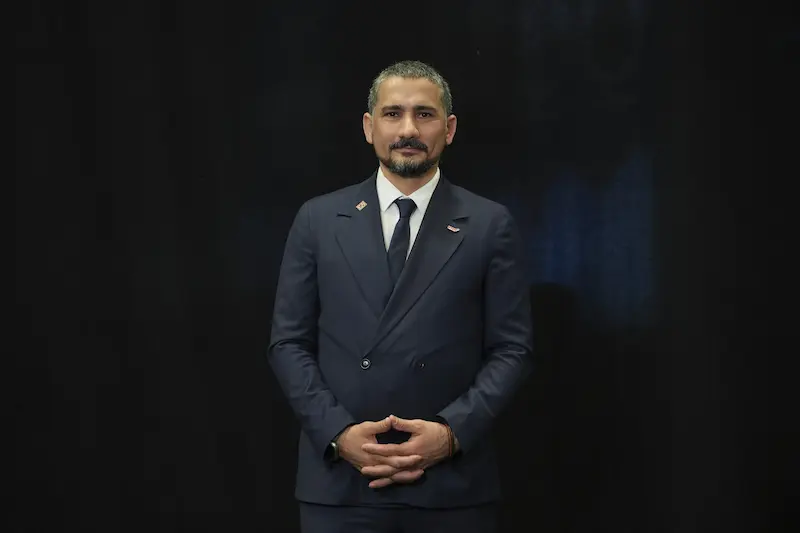
Interview by Harun Yazıcı
At a time when global e-commerce is being rapidly reshaped, cross-border trade, artificial intelligence, geopolitical risks, and next-generation collaborations have become central topics on the business agenda.
As a new trade corridor emerging along the Istanbul–Dubai–Riyadh axis prepares to shift not only regional but also global dynamics, competition for brands is increasingly defined at the intersection of technology, operations, and the right connections. In this interview with WORLDEF Founder and CEO Omar Nart, we explore the future of digital commerce, the impact of geopolitical risks on the sector, evolving business models, and the key drivers of global growth.
Mr. Omar, let us get to know you and WORLDEF a little…
I am the founder and CEO of WORLDEF. Since 2008, I have been working on entrepreneurship and business development in the field of e-commerce and digital commerce. In 2010, I founded Markacom International, one of Türkiye’s first e-export companies, and carried out operations in 22 countries. This process showed me that e-commerce is not only about technology; it is a multilayered structure that grows through operations, logistics, data, and the right connections.
WORLDEF emerged as exactly a result of this experience. Our starting point was this: there are too many events and points of contact in the e-commerce ecosystem, but a significant portion of these contacts does not turn into measurable business output. We set out to close this gap.
Today, we position WORLDEF not as an event, but as a platform that generates commerce. While bringing together brands, technology providers, investors, and decision-makers across Türkiye, MENA, and global markets under one roof, our focus is not only to establish connections, but to create real collaborations through the right matches.
For this reason, WORLDEF is no longer a conventional meeting point; it has become an ecosystem that accelerates cross-border trade, produces measurable business development, and shapes the future of digital commerce.
What is the most critical element that distinguishes WORLDEF from other organizations?
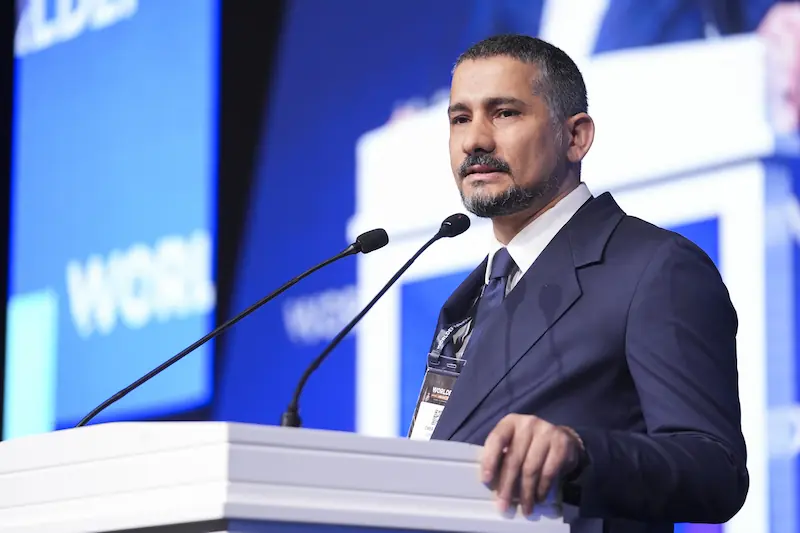
The most critical element that distinguishes WORLDEF from other organizations is its focus and how it transforms this focus into a business model. First and foremost, WORLDEF is a platform entirely dedicated to e-commerce; it started as the first structure in Türkiye focused on this field, and today it has become one of the largest gatherings for e-commerce and retail technologies in the MENA region. In this respect, it clearly differentiates itself from mixed business events. However, the real difference is not only the focus, but how we create value.
We do not position WORLDEF as a conventional fair or networking event. While bringing together areas such as e-commerce, retail technologies, marketplaces, payment systems, logistics, artificial intelligence, and cross-border trade, our aim is not only to provide visibility, but to directly produce business development. Participants on our platform do not merely gain visitor traffic; they reach real business opportunities through pre-structured, target-oriented, and qualified connections.
For this reason, WORLDEF is now much more than a trade fair where booths are set up. It is an ecosystem that focuses not on today’s, but on tomorrow’s trade models, and transforms these models into concrete business results. For us, success is not how many people attend; it is how many collaborations are born and how much commercial value is created.
How do you think the trade bridge that WORLDEF is trying to establish on the Istanbul–Dubai–Riyadh line will change the balances of global e-commerce over the next 5 years?
Regardless of the geopolitical developments currently taking place in the region, I can clearly say this: the Istanbul–Dubai–Riyadh line is becoming one of the most strategic trade axes of the coming period. With its production strength and entrepreneurial capacity, Istanbul; with its global trade, finance, and logistics infrastructure, Dubai; and with its high-scale transformation vision and investment power, Riyadh, form the three complementary pillars of this structure.
At the center of this line is Dubai. Because Dubai is not only a regional hub; it is a true connection center between South Asia, MENA, Europe, and America. Thanks to its logistics infrastructure, free zones, financial systems, and regulatory flexibility, it serves as a platform that accelerates the flow of trade. When this is combined with two strong axes such as Istanbul and Riyadh, what emerges is not just a trade line, but a multilayered global connection network.
“The Istanbul–Dubai–Riyadh axis is becoming one of the most strategic trade corridors of the future.”
In addition, the artificial intelligence and digital commerce investments that have accelerated especially in the Gulf region in the recent period are strengthening this axis even further. As e-commerce becomes smarter, more integrated, and more predictable thanks to investments in AI and data infrastructure, these three cities are becoming not only points through which trade passes, but centers where trade is managed.
The integrated functioning of these three centers will not only grow regional trade; it will also create a structure that will redefine the direction of global e-commerce flow. Within the next five years, I expect this axis to go beyond being an alternative digital trade corridor between MENA, Asia, and Europe, and become one of the new decision-making, technology, and distribution centers of global e-commerce.
How do tensions between Israel, America, and Iran, and such geopolitical risks, push you to define a roadmap in the region?
These kinds of crises show that we need to attach greater importance to critical issues such as scenario planning, regional resilience, and crisis management. Our fundamental approach on this matter is to build a more balanced, multi-centered, and multicultural structure without remaining dependent on a single market, a single line, or a single sector. At the same time, we believe that in such periods of crisis, trade, dialogue, and economic cooperation become even more important.
During such periods of crisis, the role of trade becomes even more critical. Because trade is not only an economic activity; it is also a mechanism that sustains connection, dialogue, and cooperation. As WORLDEF, at this point we are not only building a platform, but also constructing structures that deepen this connection. We have already started our work for Dubai 2027; in addition, with WORLDEF Growth Network, we have gone beyond the conventional understanding of networking and established a structure that develops more continuous and result-oriented collaborations among members.
Therefore, crises do not slow down our roadmap; on the contrary, they accelerate us toward building a stronger, more flexible, and more integrated trade infrastructure. Of course, we hope that such uncertainties will come to an end as soon as possible, but we build our work on establishing systems that can function under every scenario.
In your opinion, will the biggest breaking point in cross-border trade be technology, logistics, or regulations?
In fact, these three issues you mention are not independent of one another. However, I think the biggest breaking point will be regulations. Because technology can develop, logistics infrastructure can be strengthened through investment; but if regulations are not clear, fast, and predictable, scaling cross-border trade becomes difficult. I think tax structures, customs processes, data management, and digital trade legislation in particular will be the defining topics of the coming period.
“The future of commerce is personalized, predictive, and real-time.”
On the other hand, it is also necessary not to ignore the deadlocks that the recent crisis in the Middle East has revealed in logistics and energy. In extraordinary periods like this, regulations, technology, and logistics all become more uncertain. When we look at the regulations in this period, it will also be seen that the biggest breaking point is regulations. For this reason, I think that in the coming period, the real competition will take place not in technology or logistics, but among countries that can build regulatory systems that are faster to adapt, more open, and more predictable.
In your opinion, what are the 3 most critical factors for brands emerging from Türkiye to create global success stories?
This issue has been discussed for years. In fact, there are fundamental critical points that not only Turkish brands but all brands focused on going global should pay attention to: The most important is a very strong brand story. Today, it is no longer enough just to sell a product; the brand must have an identity, a language, and a clear value. Second, an operationally excellent structure must be established. It must be excellent because this issue is one of the dominant subjects of competition. It is essential that all processes, from logistics to customer experience, operate at global standards. Third, data- and technology-focused growth must be achieved. Artificial intelligence, performance marketing, customer analytics, and automation have now become the fundamental elements of global competition. For a company or a brand to ignore these elements means to remain in place.
In summary; for brands emerging from Türkiye to be successful globally, they need to support their production strength with branding, operations, and technology. Unless these three areas work together, global success becomes an exception rather than something systematic.
You frequently emphasize the impact of artificial intelligence on e-commerce. In your opinion, which area of e-commerce will AI transform most radically in the coming period?
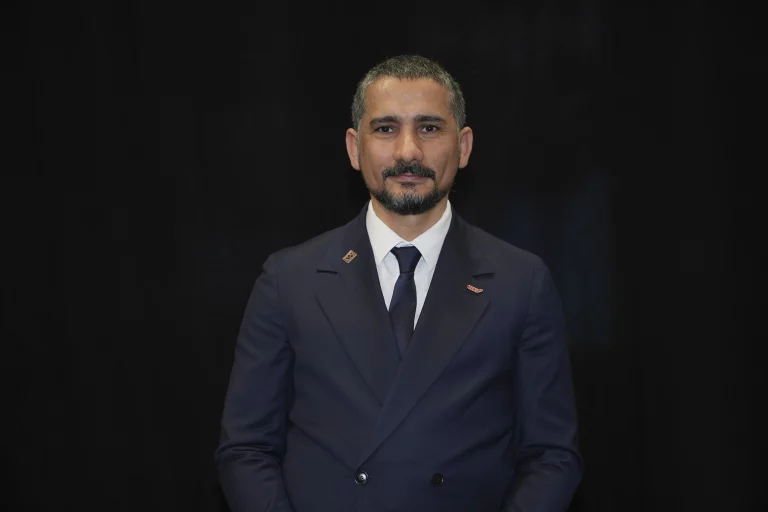
Artificial intelligence (AI) has already transformed e-commerce; in some areas, it continues to transform it. E-commerce brands that do not have AI infrastructure, teams, and technology are falling far behind. But we will also witness very important transformations in the short and medium term. I think the most radical transformation will be in customer experience and decision-making processes. Artificial intelligence is changing every area from product recommendations to dynamic pricing, from customer service to content production. But the truly major transformation will take place in trade becoming much more personalized, prediction-oriented, and real-time. In the future, brands will no longer be structures that only make sales, but intelligent organisms that understand their customers instantly and act accordingly. For this reason, it is important for e-commerce brands or entrepreneurs to establish a customer-focused AI infrastructure.
With the WORLDEF Growth Network (WGN) model, you aim to transform the conventional understanding of networking. What are the concrete outputs and success metrics of this model?
WORLDEF Growth Network is a unique network environment that turns each of its members not only into a participant, but also into an active sales ambassador. In WGN, we create business opportunities with high conversion potential through a trust-based referral model. Our main goal is to take networking beyond the exchange of business cards and transform it into a measurable business development model. On the concrete outputs side, the number of B2B meetings held, the collaboration opportunities created, investor–entrepreneur matches, commercial discussions that continue after the event, and closed agreements are important metrics for us.
We measure success not only by the number of participants, but by the quality of the connections established and their economic output. Each member of WGN is positioned in a non-competitive environment. This model provides a strong representation advantage in the sector.
Are WORLDEF’s Europe expansion plans on the agenda? Which criteria do you prioritize when entering new markets?
Europe expansion is on our agenda in the medium term, but our approach is not, in the classical sense, to “enter” a market; it is to establish a sustainable and effective ecosystem in that market. For this reason, we do not look only at geographic opportunities.
We evaluate criteria such as digital commerce volume, the maturity level of the ecosystem, openness to international cooperation, and the added value we can create together. In addition, logistics access, the investment environment, the local partner structure, and regional connection strength are also decisive in our decisions.
“Global success is no longer about production alone—it requires strong branding, operations, and technology working together.”
At this point, one of the most important steps we have taken was to pioneer the establishment of the United E-Commerce Federation (UNIEF) as WORLDEF. Established in Geneva, UNIEF, although progressing with a Dubai-based operational approach, is an umbrella structure that aims to bring together e-commerce associations in different countries, including Europe. This initiative reflects our vision not only of being an organization that arranges events, but also of establishing a structure that creates cooperation and standards on a global scale.
Therefore, we do not view Europe expansion solely as a market expansion. Through structures such as UNIEF, we are building a broader framework that connects ecosystems in different countries to one another and creates a common language and ground for cooperation. For us, what matters is not only to be present in a new country, but to be part of an ecosystem in that market that creates real value and generates a sustainable impact in the long term.



Türkiye Launches AI Revolution: 1 Trillion TL Investment in the Future of Technology
Yeşim Çevik | trbusiness.de Germany Representative Looking at the global startup and venture capital scene, I see a clear picture:...

A Timeless Experience in the Heart of the City
Abdullah Şancı, General Manager of Ramada by Wyndham Istanbul Old City, spoke with trbusiness.de about the changing dynamics of Istanbul...
AI in Logistics: Turkish AI Startup Raises $3.2 Million
Yeşim Çevik | trbusiness.de Germany Representative Founded in 2025, Munich-based startup 5U AI has raised more than €2.7 million ($3.2...
Why Does the Best Offer No Longer Win?
Onur Kurtay | Founder of Nexon Global Strategy Office For years, there was a fixed equation in the minds of...
Global Expansion: Timing Decides Everything
Yeşim Çevik | trbusiness.de Germany Representative Why international expansion requires more strategy than courage “We are entering the US market...


Türkiye Higher Education Employment Indicators 2025: Medicine and Aviation Lead Job Market Success
New official employment data reveals Türkiye’s top-paying university degrees, fastest-hiring career sectors, and graduate job market trends for 2025.

“Technological Transformation is No Longer Measured in Years, but in Months”
Celalettin Kayahan, Board Member of TSMC Holding, speaks to trbusiness.de about his journey from the textile industry to high-tech ventures,...
You Don’t Export to Germany; You Build Systems There
Onur Kurtay | Founder of Nexon Global Strategy Office Germany is the country to which Turkey exports the most. This...

Türkiye’s Franchise Market Opens Its Doors to Institutional Capital
Türkiye’s franchise market is entering a new investment era as Be My Franchise 2026 launches its Private Investor Club, bringing...


Could Business Model Export Become the Competitive Advantage of the Future? | Analysis
Franchising has evolved beyond the traditional dealership model, emerging as a strategic investment economy that enables brands to scale. But...