
Columnists
How to Produce Quality Content in Times of Crisis

Aslı Yirsutimur | Digital Content Manager
Content production is often seen as a task for calmer times. Yet in reality, communication proves its true value during periods of crisis, uncertainty, and social tension. When economies fluctuate, political debates intensify, societies experience collective trauma, or industries face disruption, institutional communication must become more careful, more measured, and more responsible. For this reason, content editing emerges not merely as a process that improves the quality of a text, but as a professional discipline that safeguards the ethical boundaries of communication.
Producing content in difficult times requires maintaining a delicate balance between staying visible and remaining sensitive. For many organizations, managing this balance is far from easy. Some choose to fall completely silent and suspend their communication. Others continue publishing at the same pace, ignoring the sensitivities of the moment. Both approaches carry risks. Total silence can disconnect a brand from the broader context, while ignoring that context can erode trust. This is precisely where editorial judgment becomes essential: it ensures not only the continuity of content production, but also its appropriateness.
Reading the Context: The Invisible Layer of Content
The first requirement for producing content during difficult times is the ability to read the context accurately. A text derives meaning not only from what it says, but also from when it is said. The same sentence may appear informative in one moment, yet seem insensitive or superficial during a crisis. For this reason, the editorial process must take into account the social and cultural atmosphere in which a text appears.
Today, one of the most common problems in social media–driven content production is the loss of context. Brands often continue with their pre-planned content calendars automatically, overlooking the emotional climate created by current events. In moments of crisis, this can lead to serious communication missteps. Cheerful campaign messages released during periods of heightened social sensitivity, or aggressive sales calls amid a heavy news cycle, can quickly undermine a company’s credibility. Editorial oversight functions as a filter at this point, ensuring that content aligns with the context in which it appears.
The Pressure of Speed and Ethical Erosion
Digital communication is built on speed. The news cycle moves quickly, content production accelerates, and organizations feel compelled to keep up with the pace. Yet speed also brings ethical risks when editorial oversight weakens. In difficult times, the tendency of some institutions to capitalize on current events can significantly damage the credibility of their content. Messages that transform social sensitivities into marketing opportunities may generate short-term visibility, but they weaken institutional reputation in the long run.
Professional content editing establishes a balance against such impulses. Editors evaluate not only whether a piece of content is accurate, but also whether it is appropriate. Speaking about a topic may be technically possible, but not every correct piece of information needs to be shared at every moment. Timing, tone, and intention are just as decisive as facts in content production.
For this reason, the fundamental question guiding content production in difficult times should be simple: Does this content genuinely contribute something, or does it merely seek attention? If a text exists solely to attract attention, particularly during sensitive periods, it carries a high risk of harming an organization’s reputation. Editorial professionalism develops the reflex to recognize such risks early.
Editorial Responsibility: Not Only What We Say, But How We Say It
In times of crisis, content production becomes an emotionally charged field of communication. The language used by institutions directly interacts with the emotional state of readers. This makes tone especially important. Texts that rely on excessive certainty, sweeping judgments, or a didactic style can provoke negative reactions during crises. By contrast, a measured, explanatory, and respectful tone strengthens trust.
Editors play a crucial role in maintaining this emotional balance. They prevent unnecessary harshness, slogans, or dramatization in language. At the same time, they regulate the density of information and the rhythm of the narrative. In difficult times, people are not only searching for information—they are also looking for orientation and meaning. A good editor ensures that a text can meet that need.
Building Trust Through Content
In the business world, trust is built not only through the quality of products or services, but also through the consistency of communication. In times of crisis, content production becomes a test of that trust. How institutions speak, what they emphasize, and which issues they choose to remain silent about directly shape long-term public perception.
For this reason, content editing is an integral part of corporate responsibility. Editors safeguard the weight of a brand’s words. They ensure that content is produced not merely for short-term engagement, but for long-term trust. In an era defined by an overwhelming flow of digital information, this perspective is one of the most important factors determining the quality of institutional communication.
Ultimately, producing content in difficult times is an editorial responsibility. Reading the context accurately, protecting ethical boundaries, and communicating without damaging meaning require professional editorial judgment. In the digital world, anyone can produce content—but those who can strike the right tone during difficult times reveal the true value of communication. Content editing is one of the professions dedicated to preserving that value.
Related Posts








Google launches AI marketing tool Pomelli
Google has introduced Pomelli, a new AI-powered marketing tool that can automatically create ads, visuals and social media posts after...
How to Produce Quality Content in Times of Crisis
Aslı Yirsutimur | Digital Content Manager Content production is often seen as a task for calmer times. Yet in reality,...


Turkey Holds Interest Rate at 37%, Pausing Nine-Month Easing Cycle
The Central Bank of the Republic of Türkiye (CBRT) announced its second interest-rate decision of the year, keeping the policy...
The Invisible Compass of Leadership in the VUCA Age
Alpay İlker Toy | International Business Development and Strategy Consultant For a generation raised within the massive, rigid, and hierarchical...
The Great Silence: Why Startup Insolvency Reports Have (Seemingly) Dropped
Yeşim Çevik | trbusiness.de Germany Representative From “Burn Rate” to Strategic Resilience: While mid-sized industrial companies buckle under the pressure...


“You Can’t Go Global Without Leaving Your Comfort Zone”
We spoke with Ersoy Soyer, founder of Nexrone, about his entrepreneurial journey, the strengths and weaknesses of Turkey’s startup ecosystem,...


War Drives Up Pump Prices Across Germany
Escalating military tensions between Iran and the United States continue to shake global energy markets, with the effects now clearly...
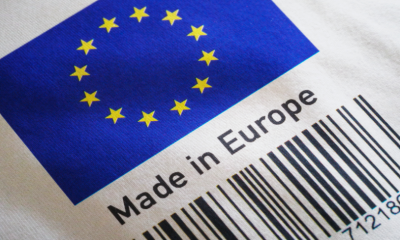

Turkey Now Included in “Made in Europe” Framework
The European Union has included Turkey in its new “Made in Europe / Made in EU” policy framework aimed at...


Turkey Inflation Hits 31.53% in February
According to the Turkish Statistical Institute (TÜİK), consumer prices in Turkey rose 2.96% month-on-month in February 2026, bringing annual inflation...


How Much Did Turkey’s Economy Grow in 2025?
TÜİK data shows Turkey’s economy expanded 3.6% in 2025, with weaker-than-expected fourth-quarter growth pointing to slowing economic momentum.